German cockroach extermination requires a mechanical and chemical distinction from standard exterior perimeter spraying. Blattella germanica is an obligate indoor pest that nests exclusively inside climate-controlled…
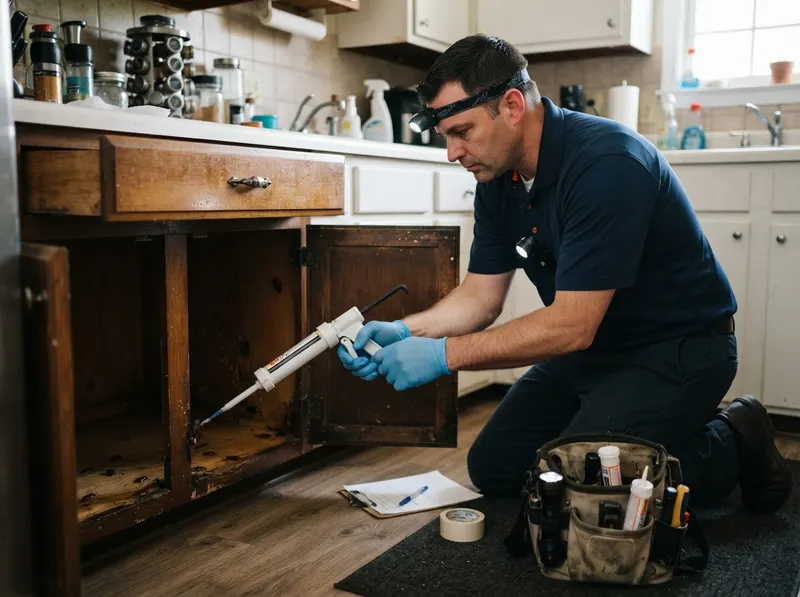
German cockroach extermination requires a mechanical and chemical distinction from standard exterior perimeter spraying. Blattella germanica is an obligate indoor pest that nests exclusively inside climate-controlled structures near water and warmth, establishing harborage inside refrigerator compressor coils, dishwasher housings, sub-cabinet voids, and electrical junction boxes. Over-the-counter pyrethroid aerosol sprays scatter these aggregations deeper into drywall chases, worsening infestations across multi-room homes. Professional intervention relies on non-repellent formulas containing abamectin, indoxacarb, or dinotefuran paired with juvenile hormone mimics like hydroprene. This chemistry permits worker nymphs and adults to ingest the bait and distribute it through coprophagy and necrophagy back to the nesting clusters without triggering defensive dispersal.
Infestation patterns in Durham County frequently correlate with specific residential architecture and microclimates. In older neighborhoods with crawlspace foundations and aging plumbing lines, such as Trinity Park, Watts-Hillandale, Old West Durham, and Old North Durham, unsealed pipe collars underneath cast-iron sinks create hidden pathways between wall voids and baseboards. Conversely, high-density residential corridors and modern slab homes near Southpoint, Northgate Park, and Brightleaf at the Park commonly see introductions via cardboard delivery boxes, secondhand electronics, or shared utility plumbing. The humid conditions near local waterways like the Eno River and forested pockets in Forest Hills provide external ambient humidity that supports indoor survival, though true German roaches do not breed outdoors.
Decision guidance for property owners depends on the visible distribution of the population. If roaches appear strictly after dark beneath a single kitchen appliance, targeted spot gel placement alongside sanitation adjustments may resolve the harborage. If nymphs are observed during daylight hours on vertical trim, inside upper food cabinets, or near bathroom plumbing fixtures in historic Hope Valley homes, the population has exceeded localized harborage capacity. At that density, a single treatment is ineffective because German cockroach oothecae carry 30 to 48 eggs protected from wet sprays. Eradication demands a two-phase protocol: an initial structural reduction followed precisely by a secondary treatment 14 to 21 days later to capture newly hatched instars before they reach reproductive maturity at day 36.
Every job gets a firm, written price after a free on-site visit.
Tell us about your german cockroach extermination job in Durham and we'll send a clear, written quote, usually the same day.
 HomeFort Pest Control