Crawl space encapsulation delivers structural defense against high subterranean moisture loads that penetrate pier-and-beam foundations across Durham, North Carolina. Unsealed crawl spaces in historic neighborhoods…
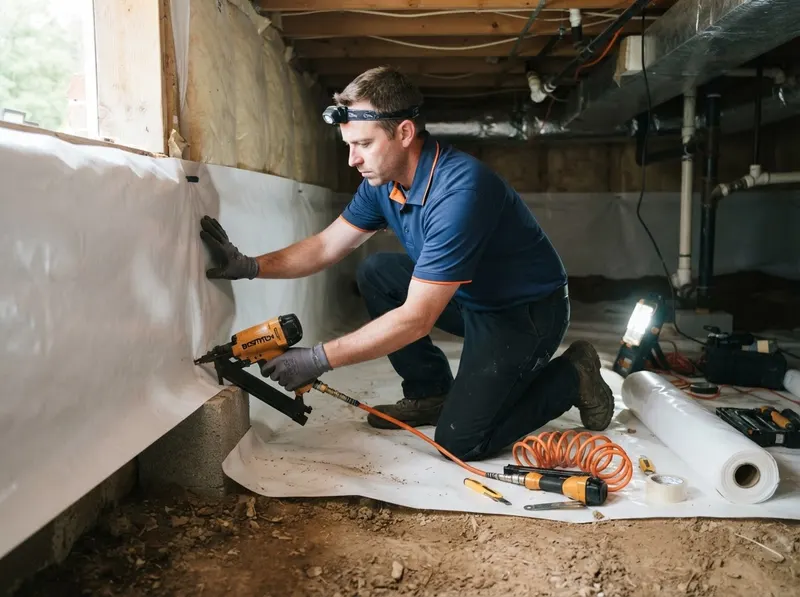
Crawl space encapsulation delivers structural defense against high subterranean moisture loads that penetrate pier-and-beam foundations across Durham, North Carolina. Unsealed crawl spaces in historic neighborhoods like Trinity Park, Watts-Hillandale, and Old West Durham consistently pull damp ambient air from Piedmont soil into floor joists, creating wood moisture readings above 18 percent. This elevated humidity attracts Reticulitermes flavipes (eastern subterranean termites) and wood-boring beetles that compromise structural subflooring. An unlined crawl space functions as an unmonitored highway for rodents, where soil burrowing gives rats direct entry to HVAC chase ways and subfloor insulation. Sealing the perimeter blocks entry corridors before pests reach upper-level living areas.
The service pairs reinforced high-density polyethylene liners with mechanical entry exclusion. Foundation walls are lined up to masonry sill plates while leaving a continuous 3-inch inspection gap required by North Carolina residential building codes for termite monitoring. Ground seams are sealed using waterproof butyl tape, while rim joists and subfloor pipe penetrations are closed with pest-resistant polyurethane foam to stop rodent access. In heavy clay soil zones near Hope Valley and Forest Hills, standard unsealed 6-mil plastic fails because unpinned plastic shifts during foot traffic, leaving exposed ground that releases gallons of water vapor daily. Full perimeter encapsulation halts moisture evaporation, lowers ambient relative humidity below 60 percent, and denies nocturnal pests the water sources required for colony survival.
Property owners deciding between a basic ground vapor barrier and complete crawl space encapsulation must balance moisture severity against structural vulnerability. A flat 10-mil ground barrier controls basic ground evaporation for low-humidity homes in modern subdivisions like Brightleaf at the Park and Southpoint, yet leaves open foundation vents and masonry piers unsealed. Complete encapsulation closes exterior foundation vents, adds an automated crawl space dehumidifier, and seals piers, eliminating moisture drafts entirely. The trade-off is upfront cost versus comprehensive protection: spot repairs preserve baseline budgets above the $250 service minimum, whereas total encapsulation prevents repeated joist insulation replacement, stops structural fungal rot, and eliminates recurring perimeter rodent infestations without requiring ongoing contract fees.
Every job gets a firm, written price after a free on-site visit.
Tell us about your crawl space encapsulation and pest vapor barriers job in Durham and we'll send a clear, written quote, usually the same day.
 HomeFort Pest Control